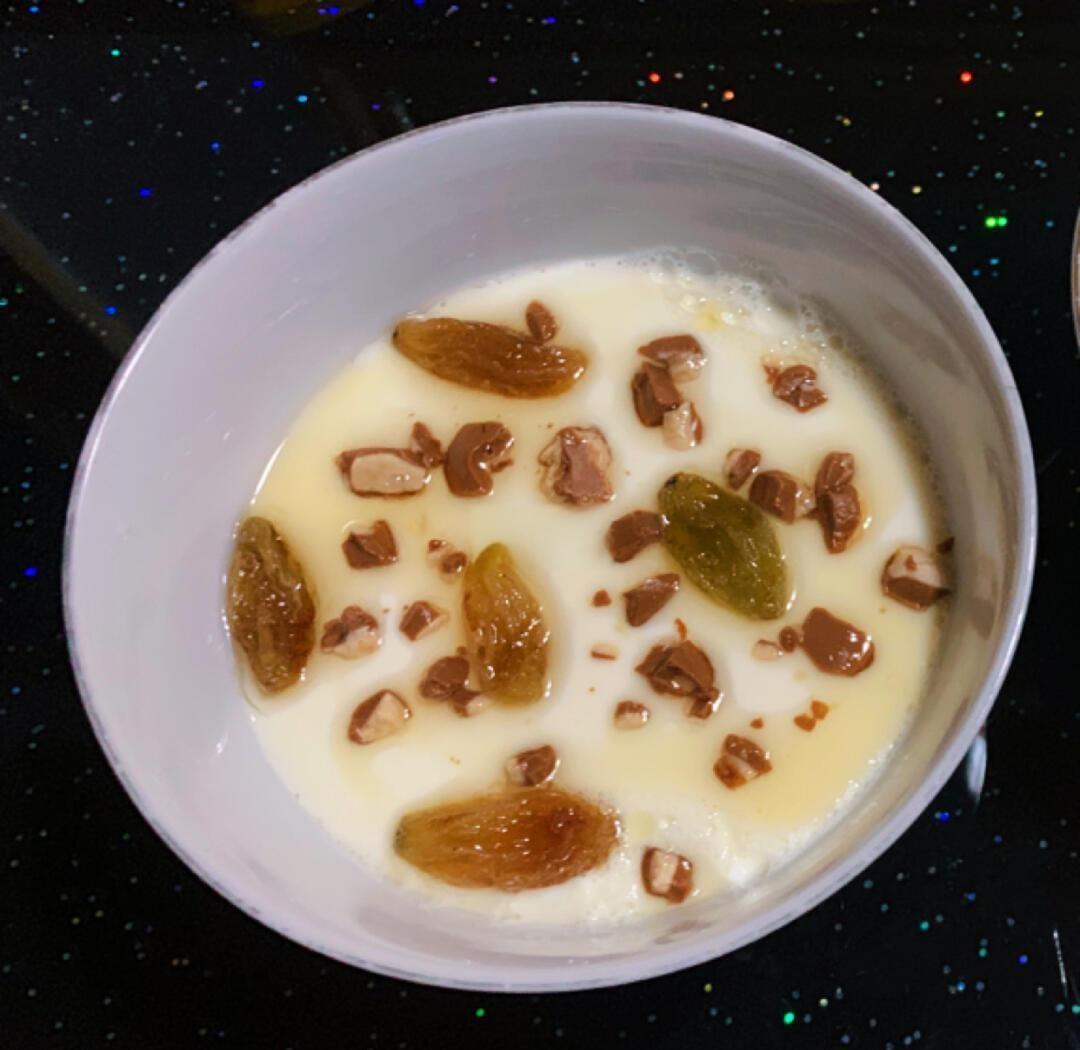
Ginger Milk Curd
Ginger milk curd is Cantonese kitchen magic: hot milk poured onto fresh ginger juice sets into a silken custard in minutes, with no gelatin, no egg and no steaming. An enzyme in old ginger coagulates the milk protein — if your temperature and ginger are right, a spoon rests on the surface like it would on tofu. The gentle ginger warmth makes it a beloved winter nightcap.
Ingredients
- Old ginger 60g (mature, fibrous — young ginger will not set)
- Whole milk 400ml (fat 3.6% or higher)
- Caster sugar 20g
- Water 1 tbsp (helps extract the ginger juice)
- Pinch of salt (optional)
- Sweetened red beans 1 tbsp (optional topping)
- Goji berries 6 (optional garnish)
- Dried osmanthus flowers a pinch (optional garnish)
- Honey 1 tsp (optional drizzle)
- Mango cubes 2 tbsp (optional topping)
- Toasted white sesame ½ tsp (optional garnish)
- Cooked lotus seeds 4 (optional topping)
Steps
- Peel the ginger and grate it finely (or blitz with the 1 tbsp water). Squeeze through cheesecloth or a fine strainer to collect about 2 tbsp (20–25ml) juice; divide between 2 bowls.
- Heat milk with sugar and salt over medium heat, stirring, until it reaches 75–80°C — steaming with small bubbles at the edge but not boiling. No thermometer? Bring to a boil, then cool 2–3 minutes.
- Stir the ginger juice in each bowl (the starch settles fast), then pour the hot milk in one confident stream from about 20cm above the bowl. Do not stir afterwards.
- Cover the bowls and leave completely undisturbed for 5–8 minutes.
- Test the set: a teaspoon laid gently on the surface should sit without sinking. If it sinks, the milk was too hot, too cool, or the ginger too young.
- Add toppings and serve warm — the curd is at its silkiest within 15 minutes of setting.
Tips
Three failure points, three fixes: use old ginger with yellow flesh and strong smell (young ginger lacks the enzyme); hit 75–80°C (boiling milk denatures the enzyme, cool milk will not activate it); and never stir after pouring — the collision itself does the mixing. Stir the settled ginger starch back up right before pouring. High-protein whole milk sets firmest; some UHT milks set poorly, so if one brand fails twice, switch brands before blaming yourself.